

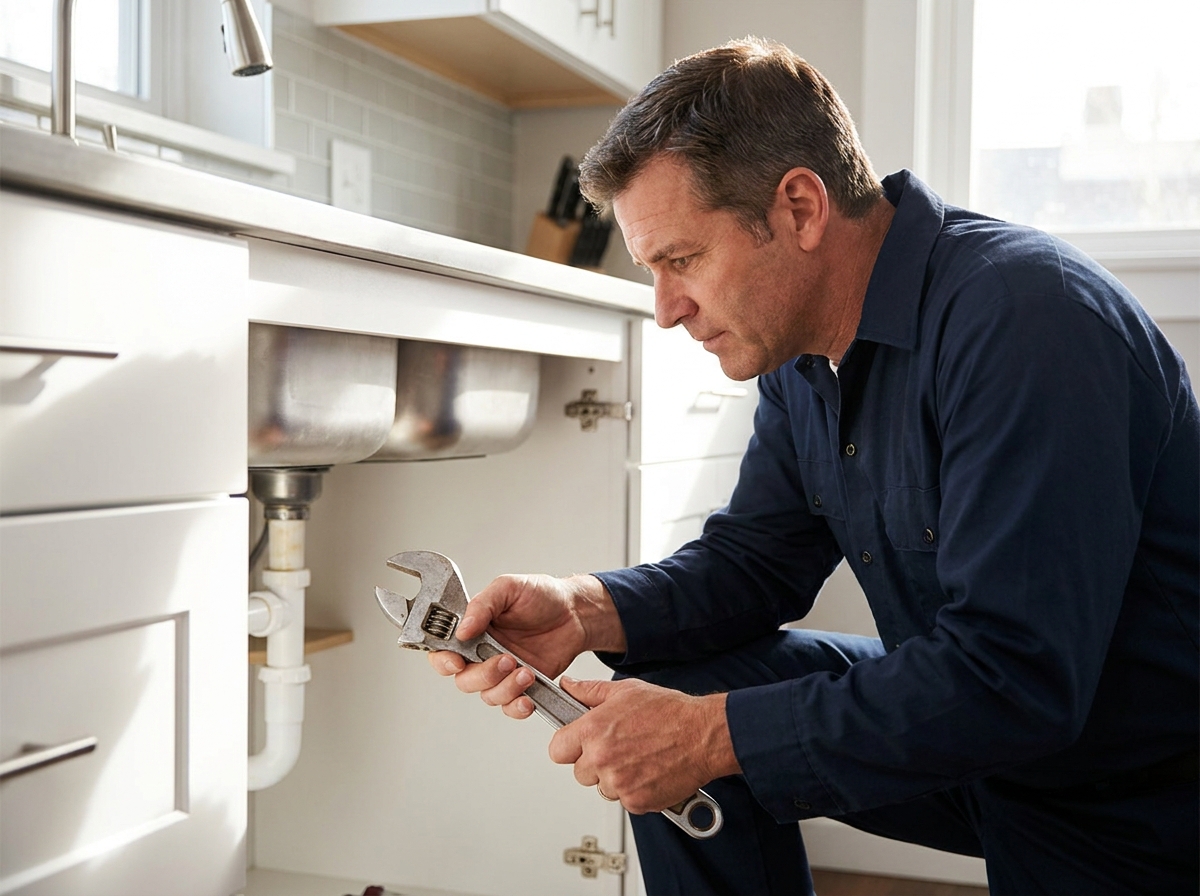
Most licensed journeyman plumbers in the U.S. earn roughly $55,000 to $75,000 per year, while apprentices start around $37,000–$48,000 and master plumbers earn $75,000 to over $100,000. Plumbers who own their own business have the highest ceiling — commonly $90,000 to $200,000+ — because they capture profit on top of their labor. Plumbing is one of the highest-paying skilled trades with strong, recession-resistant demand, and pay rises sharply with each license tier. Here's the full breakdown and how to earn more.
About these figures
These are approximate U.S. ranges for general guidance and vary widely by location, employer, specialty, and union status. For exact, current figures, check the U.S. Bureau of Labor Statistics (BLS) and local wage surveys for your area.
Plumber salary by experience level
| Experience level | Typical annual range (approx.) | What it covers |
|---|---|---|
| Apprentice plumber | $37,000 – $48,000 | Earning while training, 4–5 years |
| Journeyman plumber | $55,000 – $75,000 | Licensed, works independently |
| Master plumber | $75,000 – $100,000+ | Top tier, pulls permits, supervises |
| Plumbing contractor / owner | $90,000 – $200,000+ | Runs the business, keeps the profit |
Apprentices earn a percentage of journeyman wages while they complete on-the-job hours and classroom training. Journeyman plumbers, licensed to work independently, earn substantially more. Master plumbers — the top license tier — can pull permits, design systems, and supervise, commanding the highest employee wages. Owners who run their own shop have the highest ceiling of all because they earn business profit on top of the value of their own labor.
Plumber hourly pay by experience
Plumbers are most often paid hourly. The annual ranges above correspond to roughly these base hourly rates, before overtime and emergency premiums, which can add significantly to take-home pay.
| Level | Typical hourly (approx.) |
|---|---|
| Apprentice | $17 – $23 |
| Journeyman | $26 – $36 |
| Master | $36 – $50+ |
What affects a plumber's salary
- License level: apprentice, journeyman, and master licenses each move you into a higher pay band.
- Location: wages follow local demand and cost of living; high-cost metros pay the most.
- Specialty: commercial, industrial, gas-fitting, and medical-gas niches can pay a premium over residential service.
- Union vs. non-union: union roles (UA) often carry higher base pay, benefits, and pension.
- Emergency and on-call work: after-hours and weekend calls add meaningfully to annual income.
- Service vs. new construction: service/repair plumbers often out-earn new-construction roles thanks to billable urgency.
- Business ownership: running a shop changes earning potential entirely.
Which plumbing specialties pay the most?
Residential service is the most common and most competitive niche. Commercial and industrial plumbing — backflow, process piping, large mechanical systems — generally pays more because of the complexity and certification involved. Specialized credentials like medical-gas installation, backflow certification, and gas-fitting can command premium rates. Service plumbers who handle emergency calls also tend to earn more than new-construction plumbers due to the urgency and after-hours premiums.
How plumbers can earn more
- Advance from journeyman to master — the clearest single pay increase.
- Add high-value certifications (backflow, medical gas, gas-fitting).
- Specialize in commercial or industrial work.
- Take on more emergency and on-call work for the premiums.
- Move into lead, foreman, or project-management roles.
- Start your own plumbing business — the highest-income path for most.
Plumber pay by region and cost of living
Location is one of the biggest swing factors in plumber pay. High-cost metros and states with strong construction demand, union presence, or prevailing-wage requirements pay the most in absolute dollars, while lower-cost regions pay less nominally but can deliver a higher real standard of living. When you compare offers, look past the headline wage to local cost of living, benefits, overtime and on-call availability, and pension or retirement contributions. A union journeyman package in a major city and a non-union role in a small town can produce surprisingly similar real outcomes once living costs are factored in.
Demand matters too. Booming residential and commercial construction, aging infrastructure that needs repair and repiping, and a nationwide shortage of skilled tradespeople all push plumber wages up. Areas experiencing growth or a tight labor market reward experienced, licensed plumbers with higher pay and more leverage to negotiate.
Employee vs. business owner: the real income gap
The biggest leap in plumber earnings comes from ownership, not from a license tier. An employed master plumber earns a strong wage for their hours; an owner earns profit on every job their team completes, on top of their own labor. A well-run shop with a few plumbers can produce owner income well into six figures. But that income depends entirely on the operation: a plumber who's great with a wrench but quotes loosely, schedules poorly, and collects slowly will struggle, while a disciplined owner with tight systems keeps far more of every invoice. In plumbing, profit is an operations problem as much as a skill problem.
Frequently asked questions
Do plumbers make good money?
Yes. Plumbing pays well above the median for all occupations, with reliable demand and strong pay growth from apprentice to master. Because apprentices earn while they train, plumbers reach a solid income without four-year-degree debt, and owners can earn substantially more.
How long does it take to become a master plumber?
Apprenticeships typically run four to five years before journeyman licensing. Master plumber status usually requires several additional years of documented journeyman experience plus a more advanced exam, so the full path is often a decade or more.
What kind of plumbing pays the most?
Specialized and certified work pays best — backflow, medical gas, gas-fitting, and commercial/industrial process piping. Emergency and on-call service work also commands premium rates. Ultimately, owning a successful plumbing business has the highest earning ceiling.
How plumbers can earn more in practice
Advancing your license, specializing in higher-margin work, and ultimately owning a business are the biggest levers on lifetime earnings. Profitable plumbing businesses win on systems — accurate flat-rate pricing, tight scheduling, fast dispatch, and same-day invoicing — not just on wrench skills. Service Storm is plumbing software that runs estimating, scheduling, dispatch, invoicing, and payments in one platform, so owners keep more of every job and get paid faster instead of losing margin to admin and slow collections.
Earn more from every job
See how Service Storm helps plumbing businesses price, schedule, and get paid faster.
See plumbing softwareThe bottom line
Plumbing offers some of the strongest, most stable pay in the trades, rising sharply with each license tier. The highest earners advance to master, specialize in higher-margin work, take on emergency premiums, and — for many — own a business where they keep the profit on every job. Your income ultimately tracks your license, your specialty, and how efficiently the work gets run.
Run your whole service business in one platform
From lead to ledger — scheduling, dispatch, invoicing, and payments in a single tool built for the trades.
No credit card required