

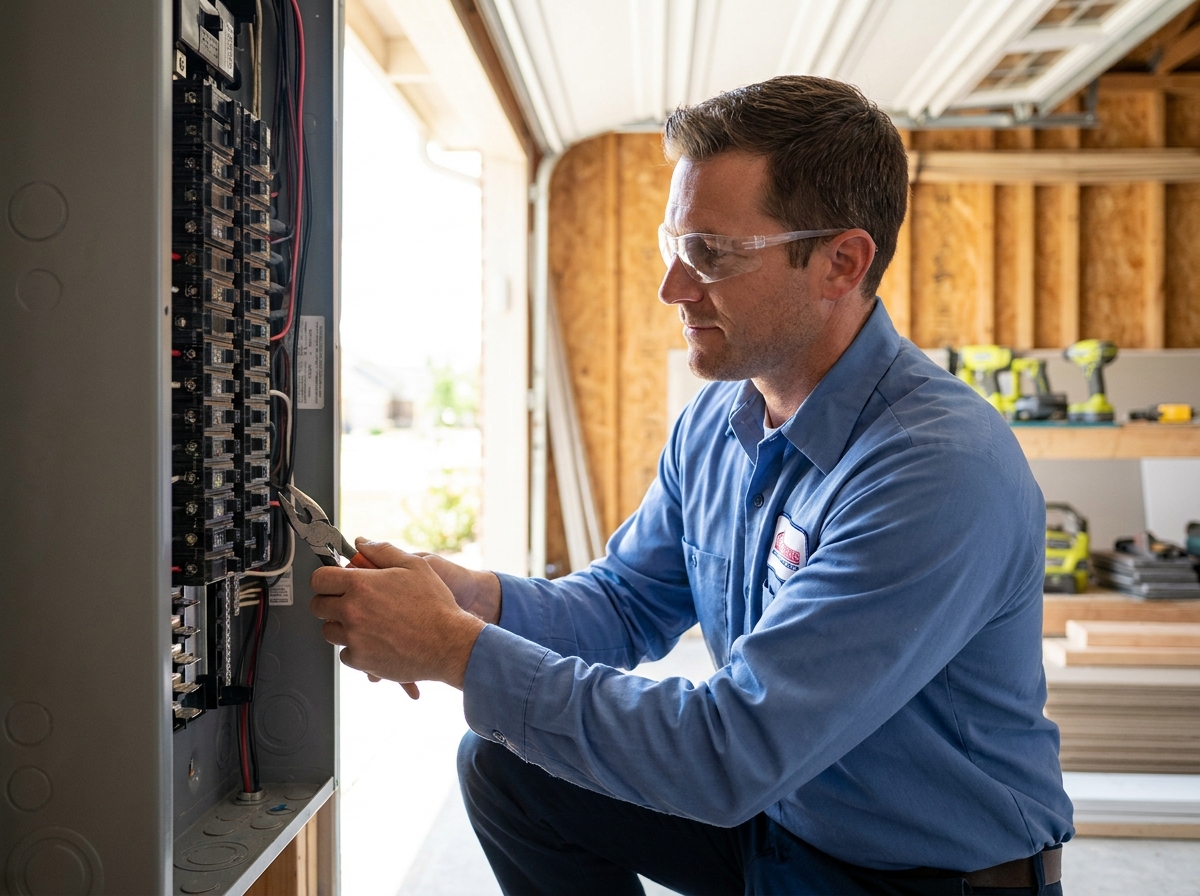
To start an electrician business you'll need the right electrical license, a registered and insured company, startup capital for a van and tools, a profitable pricing model, and systems to schedule jobs and collect payment. Electrical work is high-demand, high-margin, and safety-critical, which makes going independent one of the smartest moves a licensed electrician can make — but succeeding as an owner takes more than knowing how to pull wire. Here's a step-by-step guide to launching an electrical contracting company built to last.
The short version
Earn your journeyman hours and master or contractor license, form an LLC and get insured and bonded, budget realistically for a van and tools, price for profit instead of guessing, set up software to run the office, and win local searches with a strong Google Business Profile. Treat it like a business, not just a job you own.
1. Get licensed and certified
Licensing is the biggest gate in the trade and it varies widely by state. Most electricians climb a ladder: apprentice (typically 4 years and roughly 8,000 supervised hours plus classroom instruction), then journeyman (able to work unsupervised), then master electrician (able to design systems, pull permits, and supervise others). To run a company and bid work, most states also require you to hold a master electrician license or a separate electrical contractor license — and often both, held by a qualifying party on the business.
Some states license at the state level, others at the city or county level, and reciprocity between states is inconsistent. Confirm your exact path early, because licensing timelines directly control when you can legally take jobs and pull permits. Everything you build should be to current National Electrical Code (NEC).
- Journeyman electrician license — usually required before you can work unsupervised (varies by state).
- Master electrician license — commonly required to pull permits and qualify a business.
- Electrical contractor / business license for each jurisdiction you serve.
- Specialty certifications if you'll offer them: low-voltage, fire alarm, solar/PV, EV charger installation, or generator work.
- Local business license and permits.
Licensing varies by state
There is no single national electrical license. Hour requirements, exam content, whether the state or the locality issues the license, and reciprocity all differ. Verify current rules with your state electrical board or licensing authority before you count on a timeline.
2. Register your business and get insured
Pick a structure — most electricians form an LLC for liability protection — register with your state, and get an EIN so you can open a business bank account and hire. Keep business and personal finances separate from day one. Then secure insurance before you touch a single panel: general liability at a minimum, commercial auto for your service vehicle, and workers' compensation once you hire. Because electrical work carries real fire and shock risk, many customers and general contractors will ask for proof of coverage, and most jurisdictions require a surety bond to hold an electrical contractor license.
3. Plan your startup costs
Electrical has a moderate startup cost — you can launch a solo service operation for less than an HVAC company, but tools, a van, test equipment, and insurance still add up. Budget for the vehicle, tools, inventory, and a cash cushion to cover the gap before receivables come in. Many electricians start solo from one van and reinvest into a second truck before hiring.
| Startup item | Typical range |
|---|---|
| Service van/truck + wrap/branding | $8,000 – $35,000 |
| Hand tools, power tools, test gear, ladders | $5,000 – $20,000 |
| Licensing, bonding, exam & permit fees | $500 – $3,000 |
| Insurance (annual, liability + auto) | $2,000 – $10,000 |
| Initial materials & stock (wire, breakers, devices) | $2,000 – $5,000 |
| Field service software (monthly) | $50 – $300 |
| Website, branding & initial marketing | $1,000 – $5,000 |
All in, most single-van electrical businesses launch for roughly $15,000–$50,000. Buying quality used tools, leasing a vehicle instead of buying, and building stock gradually all keep the upfront number lower. Figures vary by state and market, so treat these as planning ranges, not quotes.

4. Set profitable pricing
Most successful electrical businesses use flat-rate pricing rather than billing purely by the hour — it's transparent for customers, removes their fear of an open-ended meter, and protects your margin because efficiency rewards you. Build a price book of your common jobs (panel upgrades, outlet and circuit additions, EV charger installs, ceiling fans, whole-home surge protection, diagnostics) with true labor cost, materials, overhead, and target margin baked in, so every quote is fast, consistent, and profitable. Offer 'good, better, best' options — for example a standard panel versus a panel with whole-home surge protection and future capacity — to lift your average ticket, and don't guess at markup: calculate it.
Set prices that protect your margin
Use our free markup calculator to price jobs that actually cover overhead and target profit.
Try the markup calculator5. Set up the systems that run the business
From day one you want one place to capture leads, schedule and dispatch jobs, build quotes, invoice, and collect payment — not a calendar, a notepad, a text thread, and a separate invoicing app. Service Storm is electrician software that ties it all together with drag-and-drop scheduling, GPS tracking, multi-option 'good, better, best' quoting, and integrated payments, so you spend your time on the work, get paid faster, and never lose a lead in a text thread.
6. Get your first customers
- Claim and fully complete your Google Business Profile — your storefront for 'electrician near me.'
- Launch a simple, fast website with services, service areas, and a click-to-call button.
- Ask every happy customer for a Google review and automate the request.
- Network with general contractors, builders, remodelers, real-estate agents, and property managers for steady referral and sub work.
- Respond to every lead fast and price transparently to turn first-time calls into repeat customers.
Mind your cash flow
Many new electrical businesses have plenty of work but run short on cash while waiting on receivables — especially on new-construction jobs where general contractors pay slowly. Invoice the moment a job is done, take payment on site for service work, ask for deposits on larger installs, and keep a few months of operating expenses in reserve.
Residential, commercial, or new construction?
Deciding who you serve shapes your tools, cash flow, and marketing. Residential service and repair has the fastest cash cycle and the highest margins, and it's the easiest to market locally. Commercial and industrial work commands larger contracts but demands more equipment, bonding, and slower payment terms. New-construction and sub work through builders offers volume but the thinnest margins and the longest payment cycles. Most solo electricians start with residential service, then layer in the others as cash flow and crew allow.
Why electrical is a strong business to start
Electrical problems are urgent, code-driven, and can't be safely DIY'd — a homeowner with a dead panel, a burning-smell outlet, or a failed inspection will pay a licensed pro to fix it regardless of the economy. That urgency and liability support premium pricing. Add aging housing stock and panels that need upgrading, a wave of electrification (EV chargers, heat pumps, solar, battery backup, and added home circuits), steady new construction, and a nationwide shortage of licensed electricians, and you have a trade with durable demand and healthy margins for owners who run a tight operation.
How long does it take to start an electrician business?
If you already hold the required master or contractor license, you can form an LLC, get insured and bonded, set up a vehicle and software, and start taking jobs within a few weeks. If you still need to qualify for the license, the timeline depends on your state's apprenticeship-hour and exam requirements and can take years, since master licensure usually requires documented journeyman experience first. Start the licensing process early, then run the legal, financial, and systems setup in parallel once you're close.
Run your electrical business from one place
See how Service Storm helps electricians schedule jobs, quote on site, and get paid faster.
See electrician softwareFrequently asked questions
How much does it cost to start an electrician business?
A single-van electrical operation typically costs roughly $15,000–$50,000 to launch, depending on the vehicle, tools and test equipment, starting inventory, and insurance. Buying a used van and building tools and stock gradually keeps the upfront cost lower. Costs vary by state and market.
Do I need a license to start an electrician business?
Almost always, yes. Most states require a journeyman license to work unsupervised, a master electrician license to pull permits, and a separate electrical contractor or business license to operate a company. Requirements vary by state and locality — some license at the state level, others at the city or county level — so confirm your rules before taking jobs.
How much do electrical business owners make?
Owner earnings vary widely with market, services, and how well the business is run. A solo owner-operator often nets more than an employed journeyman once established, and shops that add trucks and crews can scale earnings well beyond that. Margins depend on disciplined pricing and tight scheduling far more than on volume alone.
What's the difference between a journeyman and a master electrician?
A journeyman electrician can work unsupervised but generally can't pull permits or design systems on their own. A master electrician has more documented experience, has passed a more advanced exam, and can pull permits, supervise others, and qualify a licensed electrical contracting business. Most states require a master or contractor license to run a company.
Is starting an electrical business worth it?
For a licensed electrician who runs it like a business, yes. Demand is strong and growing with electrification, service work carries healthy margins, and the trade is recession-resistant because electrical problems can't wait. The owners who struggle usually do so on the business side — slow billing, weak pricing, or poor scheduling — not the technical side, which is exactly what good systems fix.
The bottom line
Starting an electrician business comes down to getting licensed, handling the legal and financial basics, budgeting realistically, pricing for profit, and putting systems in place to run jobs and get paid fast. Get those fundamentals right and protect your cash, and you've built a foundation that scales well beyond a single van.
Run your whole service business in one platform
From lead to ledger — scheduling, dispatch, invoicing, and payments in a single tool built for the trades.
No credit card required