

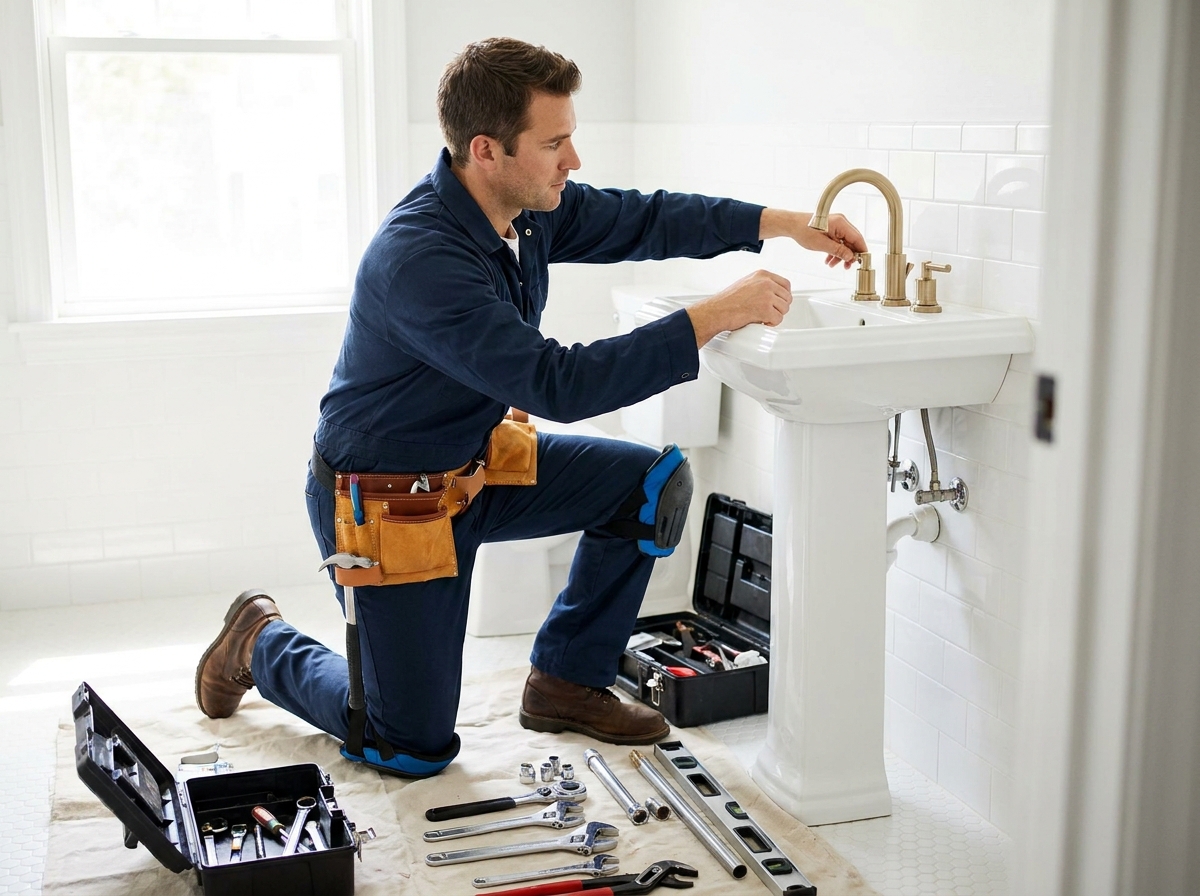
To start a plumbing business you'll need the right plumbing and contractor licenses, a registered and insured company, startup capital for a truck and tools, a profitable flat-rate pricing model, and systems to schedule jobs and collect payment. Plumbing is a high-demand, high-margin, recession-resistant trade, which makes going out on your own one of the best moves a licensed plumber can make — but succeeding as an owner takes more than wrench skills. Here's a step-by-step guide to launching a plumbing company built to last.
The short version
Get your master or contractor license, form an LLC and get insured and bonded, budget realistically for a van and tools, price flat-rate for profit, set up software to run the office, and win local searches with a strong Google Business Profile. Treat it like a business, not just a job you own.
1. Get licensed
Most states require a journeyman or, more often, a master plumber license to operate independently, plus a separate contractor's or business license to run a company and pull permits. Some states license at the state level; others at the city or county level. Requirements and reciprocity vary widely, so confirm your state and local rules early — licensing timelines directly affect when you can legally take jobs and bid work.
- Journeyman or master plumber license (varies by state).
- Plumbing contractor / business license for the jurisdictions you serve.
- Backflow, gas-fitting, or medical-gas certifications if you'll offer that work.
- Local business license and permits.
2. Register your business and get insured
Pick a structure — most plumbers form an LLC for liability protection — register with your state, and get an EIN so you can open a business bank account and hire. Keep business and personal finances separate from day one. Then secure insurance before you take a single job: general liability at a minimum, commercial auto for your service vehicle, and workers' compensation once you hire. Many jurisdictions also require a surety bond to be licensed.
3. Plan your startup costs
Plumbing has a moderate startup cost — lower than HVAC but real. Budget for the vehicle, tools, inventory, and a cash cushion to cover the gap before receivables come in. Many plumbers start solo from one van and reinvest into a second truck before hiring.
| Startup item | Typical range |
|---|---|
| Service van/truck + wrap/branding | $8,000 – $35,000 |
| Tools, drain machine, camera, safety gear | $3,000 – $10,000 |
| Licensing, bonding, permits | $500 – $3,000 |
| Insurance (annual, liability + auto) | $1,500 – $6,000 |
| Initial parts & materials inventory | $1,500 – $4,000 |
| Field service software (monthly) | $50 – $300 |
| Website, branding & initial marketing | $1,000 – $5,000 |

4. Set profitable pricing
Most successful plumbing businesses use flat-rate pricing rather than billing by the hour — it's transparent for customers, removes their fear of an open-ended meter, and protects your margin because efficiency rewards you. Build a price book of your common jobs with true labor cost, materials, overhead, and target margin baked in, so every quote is fast, consistent, and profitable. Offer 'good, better, best' options to lift your average ticket, and don't guess at markup — calculate it.
Set prices that protect your margin
Use our free markup calculator to price jobs that actually cover overhead and target profit.
Try the markup calculator5. Set up the systems that run the business
From day one you want one place to capture leads, schedule and dispatch jobs, build quotes, invoice, and collect payment — not a calendar, a notepad, a text thread, and a separate invoicing app. Service Storm is plumbing software that ties it all together with drag-and-drop scheduling, GPS tracking, multi-option quoting, and integrated payments, so you spend your time on the work, get paid faster, and never lose a lead in a text thread.
6. Get your first customers
- Claim and fully complete your Google Business Profile — your storefront for 'plumber near me.'
- Launch a simple, fast website with services, service areas, and a click-to-call button.
- Ask every happy customer for a Google review and automate the request.
- Network with builders, real-estate agents, and property managers for steady referral work.
- Respond to every lead fast and price transparently to turn first-time calls into repeat customers.
Mind your cash flow
Many new plumbing businesses have plenty of work but run short on cash while waiting on receivables or covering payroll before invoices clear. Invoice the moment a job is done, take payment on site when you can, and keep a few months of operating expenses in reserve.
Why plumbing is a strong business to start
Plumbing problems are urgent, non-negotiable, and recession-resistant — a homeowner with a burst pipe or no hot water will pay to fix it regardless of the economy. That urgency supports premium pricing, especially for service and emergency work. Add aging housing stock that constantly needs repair and repiping, steady new construction, and a nationwide shortage of licensed plumbers, and you have a trade with reliable demand and healthy margins for owners who run a tight operation.
How long does it take to start a plumbing business?
If you already hold the required master or contractor license, you can form an LLC, get insured and bonded, set up a vehicle and software, and start taking jobs within a few weeks. If you still need to qualify for the license, the timeline depends on your state's experience and exam requirements and can take considerably longer. Start the licensing process first, then run the legal, financial, and systems setup in parallel.
Frequently asked questions
How much does it cost to start a plumbing business?
A single-van plumbing operation typically costs roughly $12,000–$50,000 to launch, depending on the vehicle, tools (a drain machine and inspection camera add up), inventory, and insurance. Buying a used van and building inventory gradually keeps the upfront cost lower.
Do I need a license to start a plumbing business?
Almost always, yes. Most states require a journeyman or master plumber license to do the work and a contractor's or business license to operate a company and pull permits. Requirements vary by state and locality, so confirm yours before taking jobs.
The bottom line
Starting a plumbing business comes down to getting licensed, handling the legal and financial basics, budgeting realistically, pricing flat-rate for profit, and putting systems in place to run jobs and get paid fast. Get those fundamentals right and protect your cash, and you've built a foundation that scales well beyond a single van.
Run your whole service business in one platform
From lead to ledger — scheduling, dispatch, invoicing, and payments in a single tool built for the trades.
No credit card required