

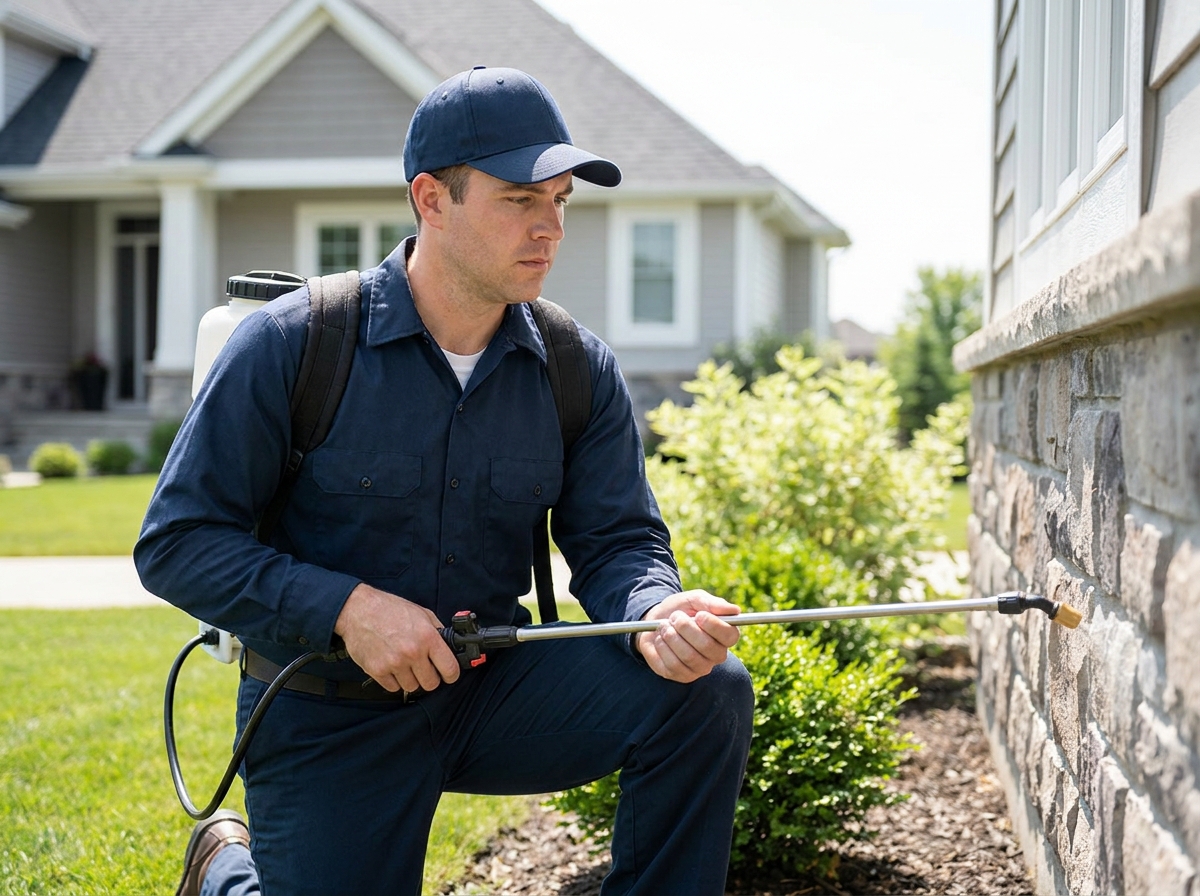
Pest control is one of the most attractive trades to start because it has built-in recurring revenue — most customers need ongoing quarterly or monthly service, not a one-time visit — and healthy margins once routes are dense. To start a pest control business you'll need a pesticide applicator license, a registered and insured company, basic equipment and chemical inventory, recurring service plans, and software to run efficient routes. Here's a step-by-step guide to launching one built to last.
Why pest control is a great business
Recurring treatment plans turn customers into multi-year revenue, and profit scales with route density — the more stops you complete per day in a tight geographic area, the higher your margin. Build recurring plans and dense routes, and the economics compound.
1. Get licensed and certified
Pest control is heavily regulated because you're applying pesticides around homes, families, and food. Most states require a pesticide applicator license and certification (often by category — general household, termite/wood-destroying organisms, lawn and ornamental, etc.), plus a business license. Many states require you to work under a certified applicator before testing for your own license. Check your state department of agriculture early — this step gates when you can legally operate and which services you can offer.
- Pesticide applicator license (and category certifications for the services you'll offer).
- Business / contractor license for your jurisdiction.
- Termite/WDO certification if you'll do termite work (often separate and more involved).
- Continuing education to keep certifications current.
2. Register and insure your business
Form an entity (an LLC is common), get an EIN, and open a business bank account. Carry general liability insurance — because you're handling chemicals, coverage is essential and often legally required, and a pollution/applicator endorsement is wise. Add commercial auto for your vehicle and workers' compensation once you hire. Keep meticulous application records; regulators can audit them.
3. Plan your startup costs
Pest control has a moderate, manageable startup cost. Many owners begin solo from a single truck and reinvest into more vehicles as routes fill.
| Startup item | Typical range |
|---|---|
| Service vehicle + branding/wrap | $5,000 – $30,000 |
| Equipment (sprayers, B&G, safety gear, bait stations) | $1,000 – $4,000 |
| Initial chemical & bait inventory | $500 – $2,500 |
| Licensing, certification & insurance | $1,000 – $4,000 |
| Route & scheduling software (monthly) | $50 – $250 |
| Website, Google Business Profile & marketing | $500 – $3,000 |
4. Build recurring service plans
The real money in pest control is recurring plans — quarterly, bimonthly, or monthly treatments billed automatically. They smooth out revenue, keep customers for years, and dramatically raise the lifetime value of every acquisition. Price plans for profit, make signing up effortless at the end of the first visit, and default new customers into a plan rather than a one-off treatment. A growing book of recurring contracts is also what makes a pest control business valuable if you ever sell.
5. Run efficient routes with the right software
Profit in pest control comes from completing more stops per day with less windshield time. The difference between a struggling route and a profitable one is often just smart scheduling and routing. Service Storm is pest control software that schedules treatments, optimizes routes, automates recurring services and reminders, tracks chemical applications for compliance, and invoices — all in one platform — so you spend your day treating properties, not driving and doing paperwork.
Run tighter routes, keep more profit
See how Service Storm schedules recurring treatments and optimizes routes for pest control.
See pest control software6. Get your first customers
- Claim and complete your Google Business Profile — 'exterminator near me' starts there.
- Gather reviews after every successful treatment to build local trust.
- Offer an introductory plan price to convert one-time calls into recurring contracts.
- Target neighborhoods where you can cluster customers and build dense, profitable routes.
- Partner with real-estate agents and property managers for steady referral work.
Pest control marketing rewards trust and speed. Homeowners who spot a wasp nest, a rodent, or termites want a fast, confident response, so a complete Google Business Profile, strong reviews, and quick lead follow-up convert far better than a clever ad. Seasonal demand spikes — ants and mosquitoes in spring and summer, rodents in fall — are predictable, so time your promotions and re-marketing to your existing list around them to capture work when intent is highest.
Stay compliant
Pesticide regulations, application records, and label laws are strictly enforced. Track every application — chemical, rate, location, and applicator — from day one. Software that logs this automatically protects your license if you're ever audited.
Understanding pest control unit economics
Pest control profit is mostly a math problem about routes and recurring revenue. A one-time treatment earns a single fee; a customer on a quarterly plan earns that fee four times a year, every year, with almost no new acquisition cost after the first visit. Layer enough plans into a tight geographic cluster and your cost per stop falls while revenue per route day rises — that's the engine of a profitable pest control company. The two numbers to obsess over are recurring-plan count and stops completed per technician per day.
Frequently asked questions
How much does it cost to start a pest control business?
A single-truck pest control startup typically runs roughly $10,000–$45,000, covering the vehicle, sprayers and equipment, initial chemical inventory, licensing and certification, insurance, and basic marketing. Buying a used vehicle and building routes gradually keeps the upfront cost lower.
Do you need a license to start a pest control business?
Yes. Pest control is regulated in every state, and you'll need a pesticide applicator license (plus category certifications for the services you offer) and a business license. Termite/WDO work usually requires additional, more involved certification. Check your state department of agriculture for specifics.
The bottom line
Starting a pest control business comes down to getting properly licensed, handling the legal and insurance basics, building recurring service plans, and running dense, efficient routes with good systems. Nail those — and keep your application records clean — and you've built a durable, high-margin company with recurring revenue baked in.
Run your whole service business in one platform
From lead to ledger — scheduling, dispatch, invoicing, and payments in a single tool built for the trades.
No credit card required