

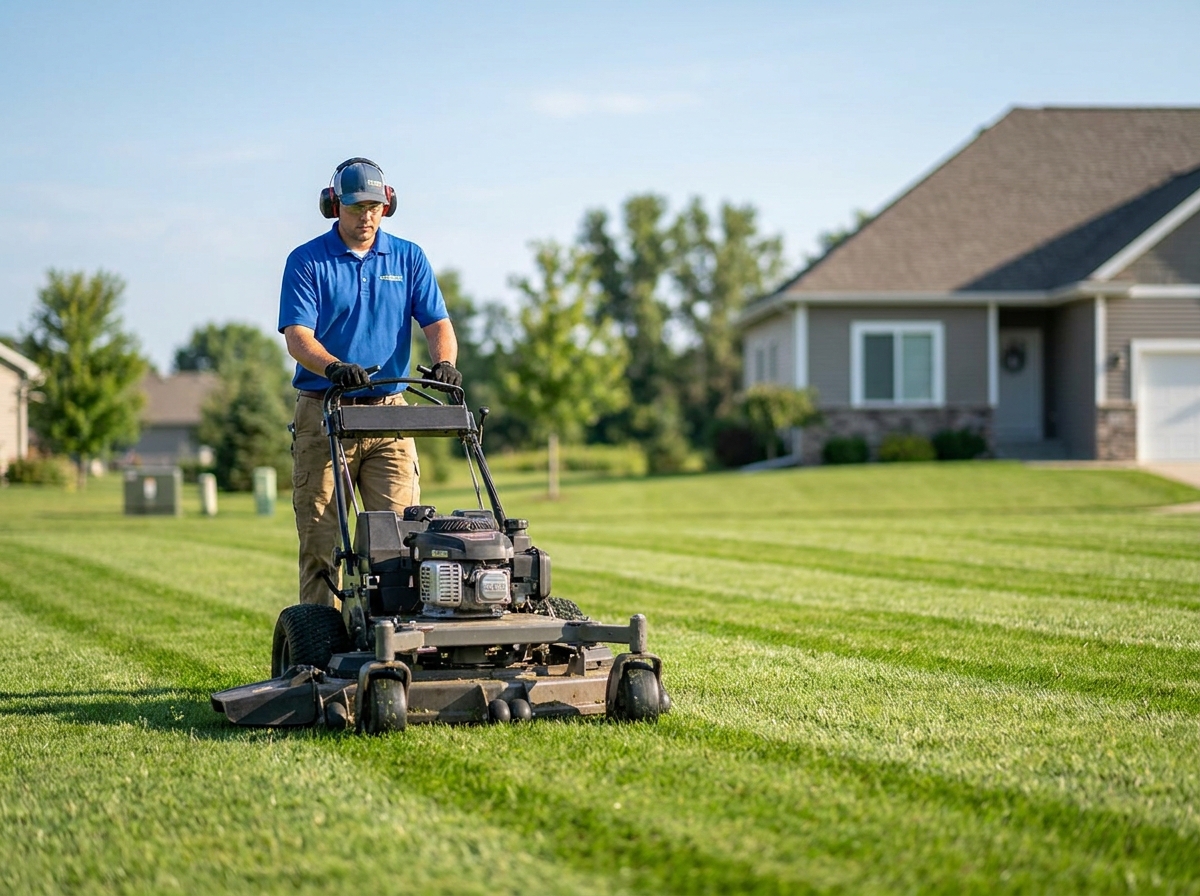
Landscaping has a low barrier to entry — many owners start with a mower, a trimmer, and a truck — and strong recurring-revenue potential through maintenance contracts. To start a landscaping business you'll need to choose your service mix, register and insure the company, buy or finance basic equipment, price jobs for profit, and put scheduling and routing systems in place. This step-by-step guide covers how to turn a truck and a mower into a landscaping company built to grow season after season.
Landscaping is a logistics business
Once you have a few crews and routes, the work isn't just mowing — it's getting the right crew to the right properties in the right order with the least drive time. Recurring maintenance contracts plus tight routing are what separate a profitable landscaping company from a busy, broke one.
1. Decide on your services
Choose your mix carefully, because it shapes your equipment, hiring, and cash flow. Recurring lawn maintenance provides steady, predictable income but thinner per-job margins. Design-and-install projects (patios, plantings, hardscaping) deliver much bigger tickets but are lumpier. Many owners anchor on recurring maintenance for stable cash flow and layer in higher-margin projects and seasonal work.
- Recurring lawn maintenance (mowing, edging, fertilization) — steady cash flow.
- Seasonal cleanups (spring/fall, leaf removal) — predictable seasonal spikes.
- Design-and-install / hardscaping — high-ticket projects.
- Irrigation install and repair — often requires licensing.
- Snow removal — keeps crews earning in winter in cold climates.
2. Register and insure your business
Form an entity (an LLC is common), get an EIN, and open a business bank account. Carry general liability insurance — flying debris, property damage, and equipment are real risks — plus commercial auto for your truck and trailer, and workers' compensation once you hire. Check whether your state requires licensing for specific services such as pesticide/herbicide application, fertilization, or irrigation work; those often need separate certifications.
3. Plan your startup costs
You can start lean and scale up as contracts come in. Commercial-grade equipment costs more but lasts and works faster, which matters when you're billing by the job.
| Startup item | Typical range |
|---|---|
| Mowers, trimmers, blowers, hand tools | $2,000 – $15,000 |
| Truck & trailer to haul crew and equipment | $5,000 – $40,000 |
| Business registration, licensing & insurance | $1,000 – $4,000 |
| Scheduling, routing & invoicing software (monthly) | $50 – $250 |
| Website, Google Business Profile & marketing | $500 – $3,000 |

4. Price for profit
Price by the job, not purely by the hour, so a fast, well-equipped crew increases your margin instead of getting penalized for efficiency. Know your true cost per visit — labor, fuel, equipment wear, and overhead — and price above it with a real margin. Build maintenance contracts that lock in recurring revenue across the whole season (and bill evenly month-to-month if you can), and use multi-option proposals to upsell mulch, plantings, and enhancements on top of the base service.
Price jobs that actually profit
Use our free markup calculator to set landscaping prices that cover overhead and target margin.
Try the markup calculator5. Put systems in place
Landscaping is fundamentally a logistics business — crews, routes, recurring visits, and seasonal schedules that change with the weather. A whiteboard works for one crew and falls apart at three. Service Storm is landscaping software that handles crew scheduling, route optimization, recurring maintenance, multi-option proposals, invoicing, and payments in one platform, so you spend less time juggling routes and chasing invoices and more time growing the business.
6. Find your first clients
- Claim and complete your Google Business Profile so you show up for local searches.
- Ask happy clients for reviews after standout work — landscaping is highly visible and referral-driven.
- Target neighborhoods where you can cluster jobs and slash drive time between stops.
- Offer recurring maintenance at the close of one-time work to build a steady base.
- Network with property managers, HOAs, and commercial-property owners for larger contracts.
Pro tip
Route density beats geographic reach. Ten lawns on one street are far more profitable than ten lawns spread across the county. Grow tight clusters of recurring customers before you chase work across town.
Managing seasonality and cash flow
Landscaping is seasonal in most regions, and that rhythm can wreck a business that doesn't plan for it. Revenue surges in spring and summer and can dry up in winter, while equipment payments and (if you keep crews on) payroll continue year-round. Smart owners smooth the curve:
- Add winter services where you can — snow removal, holiday lighting, or cleanups — to keep crews and cash flowing.
- Offer annual maintenance contracts billed evenly month-to-month so income is steady even when the work isn't.
- Reserve a portion of peak-season profit to cover the slow months and equipment maintenance.
- Front-load spring sales — the customers you sign in March fund the whole season.
Frequently asked questions
How much does it cost to start a landscaping business?
A lean lawn-maintenance startup can launch for a few thousand dollars in equipment if you already have a truck, while a fully equipped operation with commercial gear and a trailer can run $20,000–$50,000+. Many owners start small with residential maintenance and reinvest into bigger equipment as contracts grow.
Is a landscaping business profitable?
Yes, particularly once you build recurring maintenance contracts and dense, efficient routes. Margins improve when you price per-job rather than by the hour, minimize drive time, and add higher-ticket install and enhancement work on top of the recurring base.
The bottom line
Starting a landscaping business is about choosing your service mix, handling the legal and insurance basics, pricing per-job for profit, building recurring maintenance revenue, and running tight, well-routed schedules with good systems. Get those right — and grow dense neighborhood routes — and you've built a company that compounds season after season.
Run your whole service business in one platform
From lead to ledger — scheduling, dispatch, invoicing, and payments in a single tool built for the trades.
No credit card required